- Call / Whatsapp : +92 300 8467101
- PKR - Pakistan

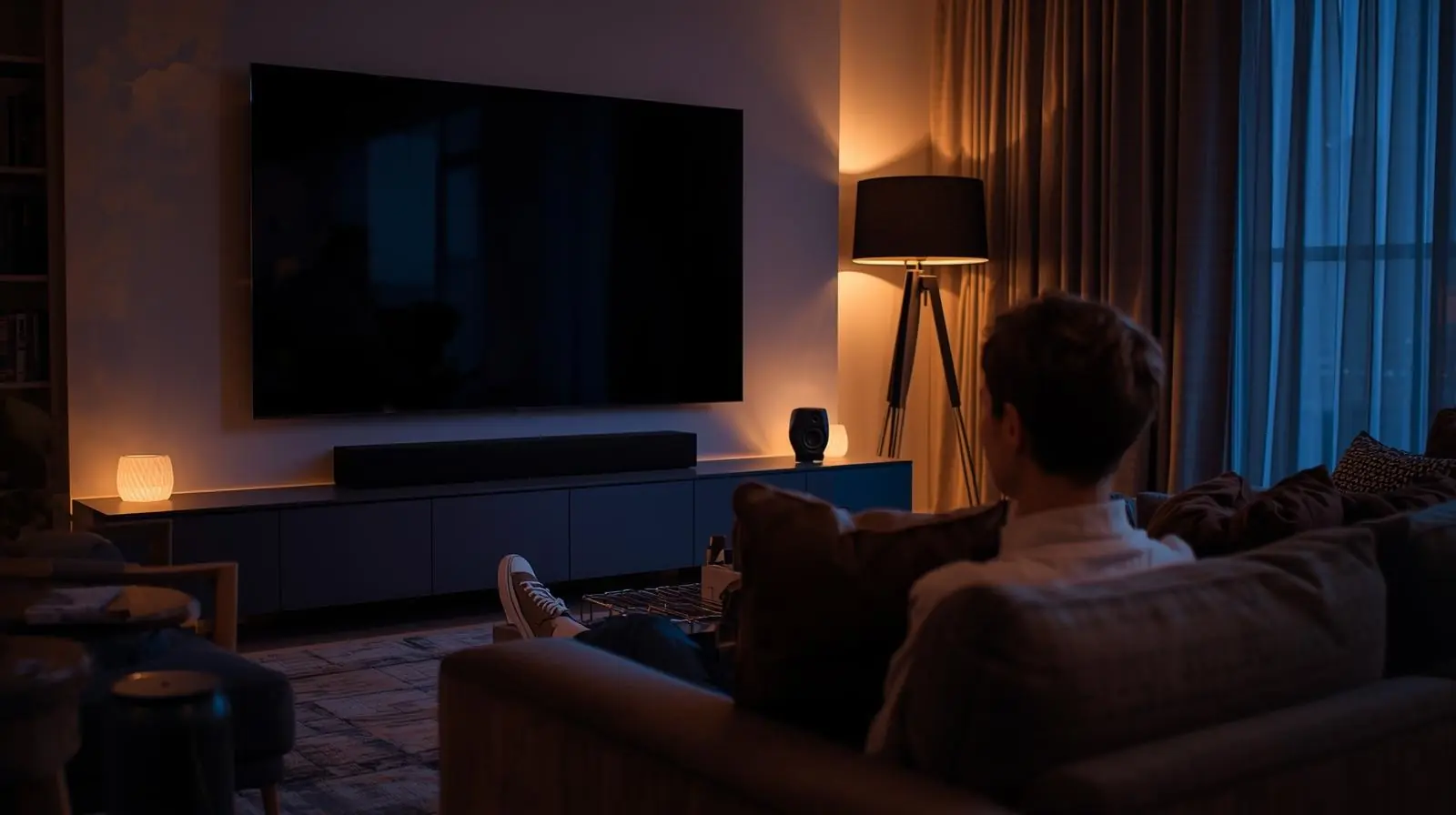
What Is Immersive Audio?
Immersive audio refers to sound that surrounds the listener from every direction, including above and below. Unlike traditional stereo or surround sound, immersive audio is designed to replicate the way humans naturally hear in real environments.

Height channels: Adds overhead sound for a vertical dimension.
Precise object placement: Sounds can move seamlessly in 3D space.
Greater depth: Creates a feeling of distance and proximity.
Enhanced realism: Replicates natural hearing for lifelike experiences.
By creating a multidimensional listening environment, immersive audio pulls audiences into the story, making music, movies, and games feel more engaging than ever.
Dolby Atmos: Redefining Cinematic and Home Sound
Dolby Atmos is one of the most widely adopted immersive audio technologies. Originally developed for theaters, it is now available across smartphones, TVs, soundbars, headphones, and even cars.

Unlike traditional surround sound, which is limited to fixed channels, Dolby Atmos treats audio as individual objects. Each sound object can be placed anywhere in a 3D environment, rather than being tied to a specific speaker.
For example:
A helicopter can be heard flying overhead rather than just from left to right.
Rain can sound like it is falling around and above you, not just from front speakers.
Dialogue remains clear and centered, even in action-heavy scenes.
This flexibility creates an enveloping soundscape that adapts to different playback systems.
Cinemas: Many theaters now feature Dolby Atmos systems with ceiling and side speakers.
Streaming platforms: Services like Netflix, Disney+, and Apple TV+ support Dolby Atmos titles.
Music streaming: Apple Music, Amazon Music, and Tidal offer Dolby Atmos music catalogs.
Gaming: Xbox and Windows support Atmos-enabled games for spatial accuracy.
Home entertainment: Soundbars and AV receivers bring Atmos to living rooms.
Dolby Atmos has quickly become the benchmark for immersive sound, raising audience expectations for premium entertainment.
3D Audio: Personalized Spatial Sound
While Dolby Atmos dominates cinematic and home entertainment, 3D audio is making strides in music, gaming, and virtual reality. 3D audio is not tied to a specific brand. Instead, it refers to the broader category of technologies that create spatial sound.

3D audio uses binaural rendering and spatial mapping to replicate how humans hear in real life. By simulating the way sound waves interact with our ears and head, 3D audio makes listeners feel as if they are inside the sound field.
For example:
A guitar solo might sound like it is being played just to your right.
In VR, footsteps could be heard approaching from behind.
In gaming, gunfire can be located precisely based on direction.
Music production: Artists and producers are experimenting with 3D mixes to give songs more depth.
Virtual reality (VR) and augmented reality (AR): 3D audio is essential for immersion.
Gaming: Pinpointing sound direction is crucial for competitive play.
Headphones: Personalized audio experiences using head tracking and AI tuning.
3D audio is designed to be highly adaptable, especially for headphone users, making it ideal for mobile-first and immersive digital experiences.
Dolby Atmos vs 3D Audio
Although the terms are sometimes used interchangeably, Dolby Atmos and 3D audio are not the same.
Technology: Dolby Atmos is a proprietary system, while 3D audio is a broader category.
Playback: Dolby Atmos often requires compatible hardware, while 3D audio can be delivered through software and headphones.
Use cases: Dolby Atmos excels in cinema and home entertainment, while 3D audio thrives in VR, AR, and gaming.
Both share the same goal: creating realistic, multidimensional sound experiences.
Why Immersive Audio Matters for Music
The rise of immersive audio is transforming how we enjoy and create music. Instead of listening to tracks limited to left and right channels, audiences can now experience songs with layered depth and space.
A concert-like experience at home.
More emotional impact with lifelike soundscapes.
Discovery of hidden details within tracks.
Creative freedom to place sounds anywhere in 3D space.
A chance to reimagine classic albums in immersive formats.
Opportunities for unique fan experiences on streaming platforms.
Immersive music is reshaping the future of streaming, making it a key area for both fans and creators.
Immersive Audio in Gaming and VR
For gamers and VR users, sound is more than entertainment. It is critical for immersion and performance.

Spatial awareness: Identifying enemy locations based on sound direction.
Realism: Environments feel more alive with layered soundscapes.
Competitive edge: Faster reaction times with precise audio cues.
Many game developers now integrate Dolby Atmos or custom 3D audio engines to elevate gameplay. In VR, 3D audio is non-negotiable since visual immersion alone is incomplete without accurate sound.
The Future of Immersive Audio
The demand for immersive audio is expected to grow across industries. From cinema to automotive to everyday mobile devices, the possibilities are endless.
AI-powered personalization: Custom sound profiles for each listener.
Wider adoption in music streaming: More catalogs being remixed in immersive formats.
Head-tracking technology: Dynamic sound adjustments as you move.
Integration with wearables: Smart glasses and earbuds offering 3D experiences.
Automotive sound systems: Cars with built-in Dolby Atmos for a live concert feel.
As devices and platforms continue to support immersive sound, the technology will become a standard expectation rather than a luxury feature.

Conclusion
Immersive audio technologies like Dolby Atmos and 3D audio are reshaping the way we hear entertainment. By surrounding listeners with sound from every direction, these formats create experiences that feel lifelike, emotional, and unforgettable.
For movie lovers, it means cinema-quality sound at home. For gamers, it means sharper awareness and deeper immersion. For music fans, it means rediscovering songs in new dimensions. And for creators, it means limitless possibilities in storytelling.
As adoption grows, immersive audio is set to become the new standard across industries. Whether you are streaming a playlist, watching a blockbuster, or diving into a virtual world, immersive sound is redefining how we connect with content.
Ready to explore immersive audio? Start by trying Dolby Atmos or 3D audio on your favorite streaming platform today and experience sound like never before.
We are proud of the quality of service we provide for all orders and questions from customers. Our customer care team's combined experience and skills, together with our wide choice of products and quick order fulfilment, have helped us establish a solid reputation for providing excellent customer support & service.
Any Query Related Sales
09:00AM to 06:00PM
We welcome comments and feedback about how easy you find the Media K Solutions website to use, which can be communicated by clicking on the Contact Page. If you have questions about delivery, products, service or anything else for that matter, please contact us via live-chat, during office hours, email or telephone. Thanks

 en-gb
en-gb Germany