- Call / Whatsapp : +92 300 8467101
- PKR - Pakistan

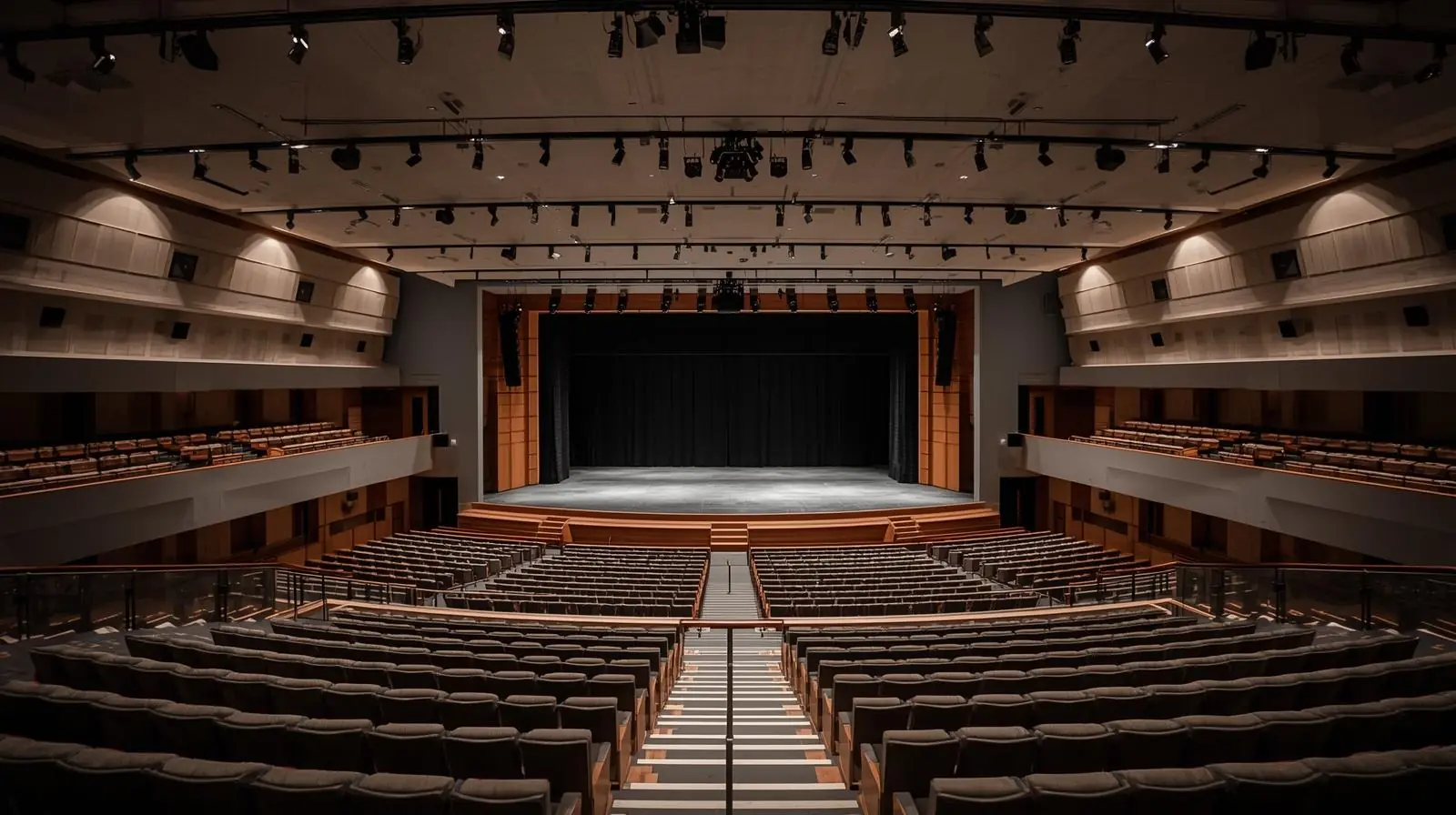
In today’s education landscape, universities are rapidly transforming their auditoriums into dynamic, multi-functional environments. These spaces are no longer used only for lectures or ceremonies, they now host hybrid classes, conferences, performances, and even community events.
To meet these evolving demands, universities must focus on two key areas: soundproofing and audio-visual (AV) equipment. Together, they create an auditorium solution that enhances acoustics, ensures clarity of communication, and delivers an immersive experience for every attendee, whether they’re in the room or joining remotely.
This guide explores how to design a university auditorium solution that combines professional-grade soundproofing systems with state-of-the-art AV technology to optimize performance, usability, and long-term value.
A university auditorium serves as the heart of campus communication and collaboration. It’s where key academic moments happen, from guest lectures to student performances and global conferences.
A well-designed auditorium is not only aesthetically appealing but also functional, inclusive, and acoustically balanced. When sound quality is poor or visuals are unclear, engagement drops, and the audience’s experience suffers.
When developing a university auditorium solution, consider:
Acoustic performance: Clear, even sound distribution throughout the space.
Sound isolation: Preventing noise from leaking in or out.
Visual clarity: High-quality displays and projection systems.
Ease of control: Simple management of AV systems for lecturers and technicians.
Scalability: Future-proofing for technology upgrades.
With the right combination of soundproofing and AV systems, universities can create versatile auditoriums suitable for both in-person and hybrid learning.

Soundproofing is often the most underestimated element of auditorium design. However, it forms the foundation of an excellent acoustic environment. Without proper sound control, even the most advanced AV systems can’t perform at their best.
In a university auditorium, effective soundproofing ensures that:
Lectures, seminars, and events remain uninterrupted by outside noise.
External sounds like hallway chatter or traffic don’t distract attendees.
The audience experiences consistent, high-quality sound regardless of seating location.
Acoustic Wall Panels
Reduce echo and reverberation.
Can be customized to match architectural aesthetics.
Made from materials like fiberglass, foam, or fabric-wrapped composites.
Ceiling Treatments
Acoustic tiles or baffles absorb sound waves reflecting from overhead surfaces.
Ideal for large halls where ceiling height amplifies echo.
Sound-Isolated Doors and Windows
Specialized seals prevent sound leakage.
Double-glazed acoustic glass minimizes external noise.
Floating Floors
Isolate vibrations from footsteps, subwoofers, or nearby activity.
Enhance comfort for both audience and presenters.
Acoustic Curtains and Drapes
Offer flexibility for different events.
Absorb reflections and balance reverberation times.

A well-soundproofed auditorium offers:
Enhanced speech intelligibility for lecturers and speakers.
Improved recording quality for hybrid and virtual sessions.
Comfortable acoustics for music, drama, and presentations.
Compliance with university noise regulations and local building codes.
Ultimately, soundproofing is not just a technical upgrade, it’s an investment in student engagement and academic excellence.
Once the acoustic environment is optimized, the next step is equipping the space with advanced AV technology. Modern auditoriums rely heavily on audio-visual integration to create engaging, interactive learning experiences.

High-Definition Projectors and LED Displays
Ensure crystal-clear visuals for large audiences.
LED video walls are ideal for bright environments or hybrid presentations.
Professional Sound Systems
Line-array speakers for even sound coverage.
Subwoofers for performance events or film screenings.
Digital signal processors (DSPs) to fine-tune acoustic balance.
Wireless Microphone Systems
Lavalier or headset microphones for presenters.
Handheld mics for Q&A sessions.
Multi-channel receivers for simultaneous events.
Cameras and Streaming Equipment
PTZ (Pan-Tilt-Zoom) cameras for capturing lectures and events.
Integration with streaming platforms for hybrid or remote learning.
Automated tracking systems that follow presenters seamlessly.
Control Systems and Touch Panels
Centralized control of lighting, sound, and visuals.
User-friendly interfaces for technicians and faculty.
Integration with smart classroom systems.
Assistive Listening Devices (ALDs)
Ensure accessibility for students and guests with hearing impairments.
Can integrate with wireless or Bluetooth-based systems.
A critical part of any AV solution is seamless integration. When all components, sound, lighting, projection, and recording, are unified through a central control interface, it simplifies operations and reduces errors.
Universities can benefit from:
Automated room scheduling: Linking AV systems with campus calendars.
Remote monitoring: Technical staff can troubleshoot from any location.
Energy efficiency: Smart controls power down unused systems automatically.
This level of automation not only saves time but also extends the lifespan of expensive AV equipment.
Technology evolves rapidly, and today’s best-in-class system can become outdated within a few years. That’s why future-proofing is essential for every university auditorium solution.

Modular Infrastructure: Use flexible cabling and conduit systems that allow easy upgrades.
Network-Based AV (AV-over-IP): Enables streaming and content distribution over campus networks.
Cloud Integration: Simplifies remote access and hybrid event management.
Flexible Seating and Lighting: Adaptable layouts accommodate different types of events.
A forward-thinking approach ensures that the auditorium remains relevant for years, even as educational technology advances.
While technology and acoustics are crucial, the true success of an auditorium lies in how it feels for the people who use it.
Comfortable seating and sightlines ensure every attendee feels connected.
Balanced lighting systems prevent eye strain and highlight speakers naturally.
Optimized sound zones ensure no one misses key dialogue or music nuances.
Modern universities must also prioritize inclusivity:
Hearing loop systems for hearing-impaired students.
Captioning and transcription tools for remote participants.
Wheelchair-accessible seating and control panels.
These features demonstrate the institution’s commitment to equal access and participation.

Installing top-tier soundproofing and AV systems is only the beginning. Regular maintenance ensures consistent performance and avoids costly downtime.
Annual acoustic testing to ensure panels and insulation remain effective.
Firmware updates for projectors, mixers, and control systems.
Routine calibration of microphones, speakers, and lighting.
Staff training sessions for faculty and event coordinators.
Partnering with a professional AV integrator who offers ongoing support contracts can significantly extend the system’s lifespan and keep the auditorium running smoothly.
A successful university auditorium solution combines soundproofing excellence with cutting-edge AV integration to create a space that inspires, informs, and connects.
By prioritizing acoustic design, modern equipment, and scalability, universities can transform their auditoriums into multi-purpose venues that serve education, culture, and innovation.
Soundproofing is the foundation for clear communication and audience comfort.
AV equipment brings interactivity, accessibility, and hybrid learning to life.
Integration and automation simplify control and future-proof the space.
Regular maintenance ensures long-term reliability and performance.
Investing in a complete auditorium solution is more than a construction project, it’s a strategic move that supports institutional growth, student engagement, and academic excellence.
Ready to upgrade your university auditorium?
Partner with professional acoustic consultants and AV specialists to design a space that meets today’s needs and tomorrow’s innovations. A well-planned auditorium solution isn’t just an enhancement, it’s a lasting investment in your university’s future.
We are proud of the quality of service we provide for all orders and questions from customers. Our customer care team's combined experience and skills, together with our wide choice of products and quick order fulfilment, have helped us establish a solid reputation for providing excellent customer support & service.
Any Query Related Sales
09:00AM to 06:00PM
We welcome comments and feedback about how easy you find the Media K Solutions website to use, which can be communicated by clicking on the Contact Page. If you have questions about delivery, products, service or anything else for that matter, please contact us via live-chat, during office hours, email or telephone. Thanks

 en-gb
en-gb Germany