- Call / Whatsapp : +92 300 8467101
- PKR - Pakistan

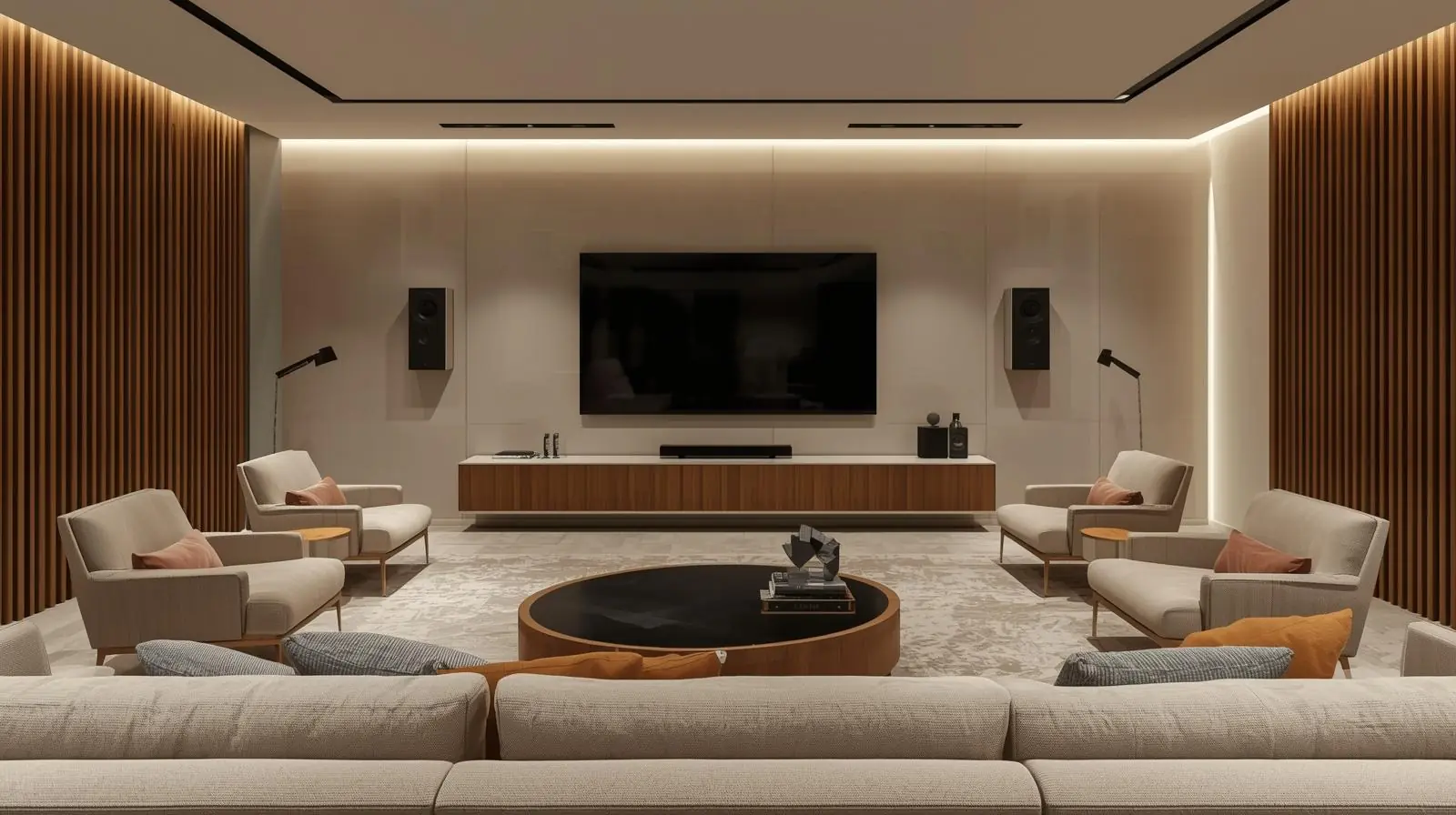
Building the perfect home theatre is no longer just about having a big screen. Sound is what truly brings movies, sports, and games to life. Whether you are considering a traditional surround sound system or upgrading to Dolby Atmos, understanding the basics will help you create a cinematic experience at home.
This guide breaks down everything you need to know about home theatre audio systems, including surround sound setups, Dolby Atmos, speaker placement, and essential tips to get the most out of your space.
Great visuals grab attention, but it is audio that makes you feel immersed. Clear dialogue, dynamic music, and powerful effects can turn your living room into a true theatre.
Surround sound and Atmos audio formats enhance depth and realism by placing sound around and above you. Instead of just hearing what is happening, you experience it.
Surround sound systems distribute audio across multiple speakers placed around a room. The goal is to create an enveloping sound field that draws you into the action.

Five main speakers (front left, front right, center, rear left, rear right)
One subwoofer for bass
Most popular and widely supported
Adds two more rear speakers for enhanced immersion
Best for larger rooms
Introduce additional front or rear speakers
Typically for advanced or custom installations
Surround sound works best in rectangular rooms where speakers can be evenly spaced.
Dolby Atmos takes traditional surround sound further by adding height channels. This allows sound to move in three dimensions. Imagine helicopters flying overhead or rain falling from above; Atmos replicates that with precision.
Unlike standard surround formats, Atmos is not tied to fixed channels. It uses audio objects that can move freely across a 3D space. The result is an ultra-immersive soundstage.

A traditional 5.1 setup plus two ceiling or upward-firing speakers
A 7.1 setup with four height speakers
Provides the most realistic overhead effects for larger spaces
Use advanced drivers and digital processing to simulate height channels
Great for smaller rooms or those who want fewer speakers
When deciding which system suits your needs, consider the following:
Small to medium rooms can achieve great results with 5.1 or Atmos-enabled soundbars
Larger rooms benefit from 7.1 or full Atmos setups
Standard surround sound systems are more affordable
Atmos systems require more speakers or specialized equipment
Most Blu-ray discs, streaming services, and gaming consoles support Dolby Atmos
Regular surround sound is more universally supported
If you want a system that adapts to new formats, Atmos is the better long-term choice
The receiver powers your speakers and decodes audio formats. Make sure it supports Dolby Atmos if you plan on using it.
Choose high-quality speakers matched to your room size. A balanced mix of bookshelf, tower, and subwoofer units provides the best results.
Handles deep bass and low-frequency effects. A single powerful subwoofer is enough for most rooms, but larger spaces may need two.
Invest in quality speaker cables and take time to calibrate your system. Many receivers include auto-calibration tools to balance sound levels.

Correct placement is key to achieving optimal performance.
Front left and right: Evenly spaced from the TV, angled toward the listener
Center speaker: Directly under or above the TV
Rear speakers: Slightly behind and angled toward the seating area
Subwoofer: Can be placed near a wall or corner for maximum bass response
Ceiling speakers: Mounted directly above the listening position
Upward-firing speakers: Placed on top of front or rear speakers to bounce sound off the ceiling
Rear height speakers: Positioned above and behind for enhanced 3D immersion

Even the best system will not perform well in a poorly treated room.
Furniture placement: Keep main seating centered and not too close to walls
Acoustic treatment: Rugs, curtains, and wall panels help reduce echo
Lighting control: Dim lighting creates a theatre-like atmosphere
Smart integration: Voice control and streaming apps make it easier to manage your system

Using mismatched speakers that disrupt balance
Placing speakers too close together
Ignoring room acoustics
Overlooking receiver compatibility with Dolby Atmos
Skipping calibration after setup
If you are just starting, you do not need to invest thousands. Here are budget-friendly approaches:
Start with a 5.1 system and expand later
Consider a Dolby Atmos soundbar for a compact solution
Buy quality used speakers instead of low-cost new ones
Upgrade gradually as your budget allows
A home theatre is an investment in entertainment. Surround sound delivers immersive audio, while Dolby Atmos takes it a step further with breathtaking realism. Choosing the right system depends on your room size, budget, and viewing habits.
Whether you begin with a simple 5.1 setup or dive straight into Dolby Atmos, proper speaker placement and calibration make the biggest difference. With the right planning, you can transform any living room into a true cinematic experience.
Ready to upgrade your home theatre? Start with a system that matches your space and add features over time. The result will be sound that not only fills the room but also pulls you right into the story.
We are proud of the quality of service we provide for all orders and questions from customers. Our customer care team's combined experience and skills, together with our wide choice of products and quick order fulfilment, have helped us establish a solid reputation for providing excellent customer support & service.
Any Query Related Sales
09:00AM to 06:00PM
We welcome comments and feedback about how easy you find the Media K Solutions website to use, which can be communicated by clicking on the Contact Page. If you have questions about delivery, products, service or anything else for that matter, please contact us via live-chat, during office hours, email or telephone. Thanks

 en-gb
en-gb Germany