- Call / Whatsapp : +92 300 8467101
- PKR - Pakistan

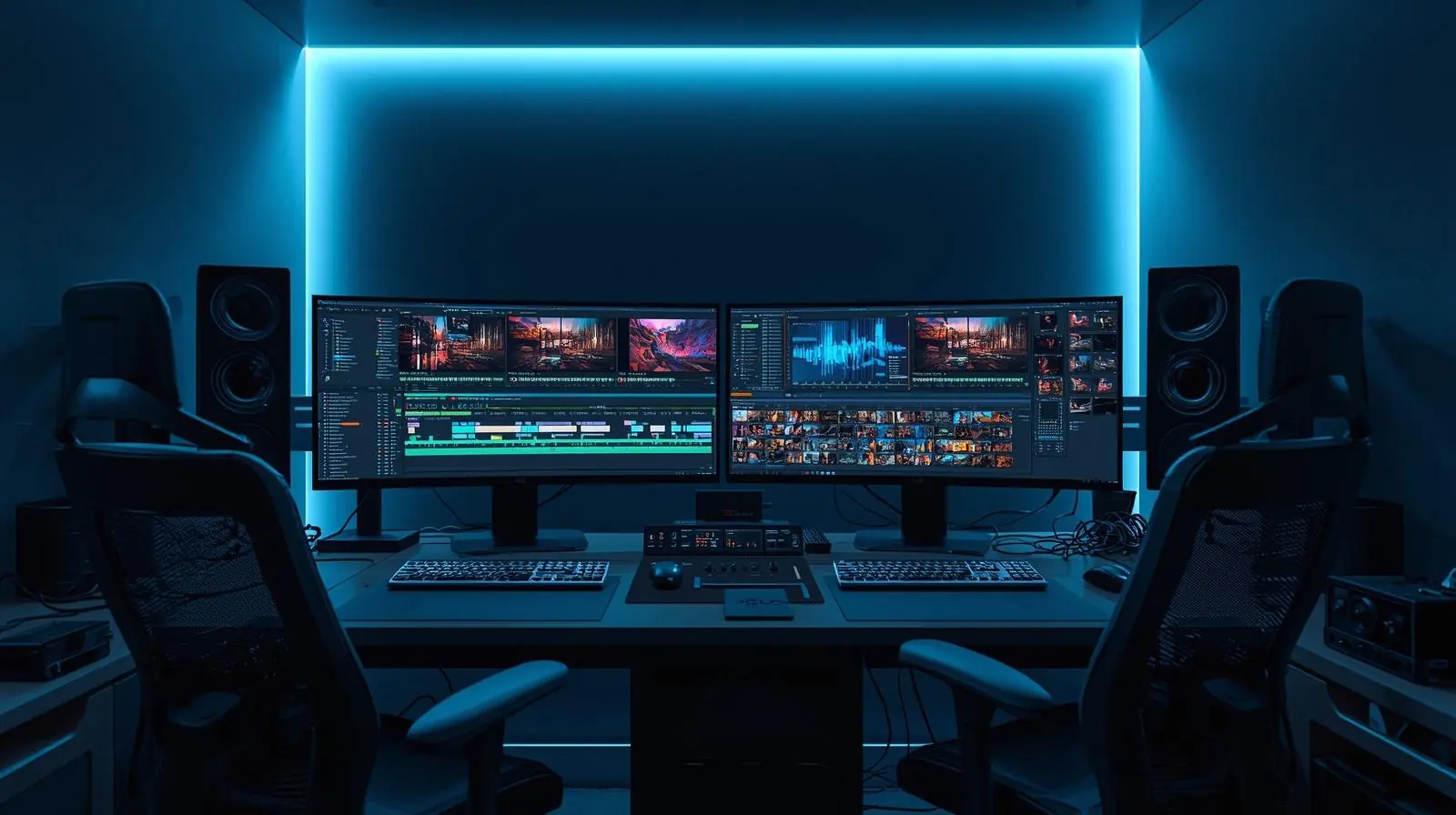
In today’s fast-paced digital landscape, content is created and consumed at unprecedented rates. Filmmakers, marketers, and media creators face growing pressure to deliver high-quality visuals quickly while staying within budget. Traditional post-production processes often require hours of manual work, from color correction and audio adjustments to visual effects. This is where AI-driven editing and post-production tools are transforming the industry.
By integrating artificial intelligence into media workflows, creators can streamline repetitive tasks, enhance creative output, and reduce costs without compromising on quality. AI is no longer an experimental technology in editing; it is becoming a practical necessity.
Artificial intelligence has been steadily integrating into creative industries for the past decade. Initially, its role was limited to automation of basic processes. Today, however, advanced AI tools can analyze footage, suggest edits, enhance audio, and even create visual effects with remarkable accuracy.

The demand for faster turnaround and scalable production has accelerated adoption across industries such as:
Film and television production
Advertising and marketing campaigns
Social media content creation
Corporate training and educational videos
For content creators and studios, AI-driven post-production means more time for creativity and less time spent on technical bottlenecks.
Manual editing is time-intensive. AI tools can analyze raw footage and automatically assemble rough cuts, significantly reducing time spent on initial edits. For large projects, this can save weeks of labor.
By automating repetitive tasks like color matching, scene detection, or transcription, teams can allocate fewer resources to technical labor. This allows studios to operate with leaner teams or redirect budget toward creative innovation.
AI algorithms can identify issues such as shaky footage, poor lighting, or inconsistent audio levels and apply fixes in real time. This ensures that the final output meets professional standards without exhaustive manual intervention.
AI makes professional-level editing more accessible to small teams and independent creators. Cloud-based AI tools allow even modest operations to produce studio-quality content at scale.
AI-driven editing software can organize footage, detect highlights, and suggest story structures. For example, sports broadcasters use AI to generate highlight reels in minutes, something that previously required extensive human input.
Color correction is one of the most time-consuming aspects of post-production. AI tools can match colors across multiple shots automatically, creating visual consistency. More advanced platforms can even emulate cinematic grading styles based on a reference image.
Poor sound can ruin an otherwise strong production. AI-powered tools now remove background noise, balance levels, and improve clarity without manual adjustments. Voice isolation features are particularly useful for interviews and podcasts.
AI supports VFX teams by automating tasks like rotoscoping, object tracking, and motion capture cleanup. These traditionally labor-intensive processes are now significantly faster, giving artists more room for creative experimentation.
With growing demand for global content, accurate transcription and multilingual subtitles are essential. AI can transcribe dialogue, detect speakers, and translate subtitles into multiple languages quickly.
Marketers increasingly use AI to produce multiple versions of the same content tailored for different audiences. For example, AI tools can adjust pacing, crop formats, or insert personalized text for different social media platforms.

While the AI landscape evolves rapidly, several platforms are already making a strong impact:
Adobe Sensei: Integrates AI into Adobe Premiere Pro and After Effects for automated editing, scene detection, and intelligent search.
DaVinci Resolve Neural Engine: Uses machine learning for facial recognition, smart reframing, and advanced color grading.
Runway: Provides intuitive AI tools for video editing, background replacement, and text-to-video generation.
Descript: Offers audio and video editing through text-based transcription, making podcast and video editing more accessible.
Topaz Labs: Specializes in AI-driven video upscaling, noise reduction, and image enhancement.

These tools illustrate how AI empowers both professionals and beginners to achieve higher efficiency and quality.
Despite its benefits, AI-driven editing is not without challenges. Understanding these limitations helps teams adopt AI wisely.
AI can automate processes, but creativity still requires human judgment. Overreliance on algorithms may lead to generic or predictable results.
Many AI tools require training and adjustment to fit into existing workflows. Editors may need time to understand how to balance automation with creative intent.
While AI reduces long-term costs, some advanced platforms come with high initial licensing fees, which can be a barrier for small studios.
AI-generated deepfakes and synthetic media raise concerns about authenticity. Responsible use of AI is essential to maintain trust in media.

AI will continue to evolve rapidly in the coming years. Emerging trends to watch include:
Real-time editing: AI will enable live video editing for events and broadcasts, reducing turnaround to near zero.
Generative video content: Beyond editing, AI will play a larger role in creating synthetic scenes and backgrounds.
Smarter collaboration tools: Cloud-based AI systems will allow teams across the world to collaborate seamlessly on post-production projects.
Personalized content at scale: Brands will leverage AI to automatically produce customized video variations for different audience segments.
AI-powered creative assistance: Tools will move beyond technical fixes to suggest narrative improvements and stylistic choices.
The combination of automation and creativity will redefine how stories are told and shared across digital platforms.
For organizations and creators looking to integrate AI into their workflows, the following best practices are recommended:
Start small: Implement AI tools for specific tasks like transcription or color matching before scaling up.
Combine AI with human oversight: Use AI for efficiency while ensuring creative decisions remain in human hands.
Stay updated: The AI landscape evolves quickly, so regularly evaluate new tools and updates.
Train your team: Provide editors with training to fully leverage AI capabilities.
Prioritize ethical use: Establish guidelines to avoid misuse of AI-generated content.
AI-driven editing and post-production are reshaping the media industry by offering unprecedented speed, efficiency, and creative possibilities. From automated editing and advanced color grading to real-time transcription and personalized content, AI tools are enabling creators to focus more on storytelling while leaving repetitive technical tasks to intelligent systems.
While challenges remain, the opportunities far outweigh the risks. The future of post-production will be defined by the collaboration between human creativity and machine intelligence.

Ready to explore AI-driven editing for your projects? Start by integrating one tool into your workflow today and experience how AI can elevate your creative output.
We are proud of the quality of service we provide for all orders and questions from customers. Our customer care team's combined experience and skills, together with our wide choice of products and quick order fulfilment, have helped us establish a solid reputation for providing excellent customer support & service.
Any Query Related Sales
09:00AM to 06:00PM
We welcome comments and feedback about how easy you find the Media K Solutions website to use, which can be communicated by clicking on the Contact Page. If you have questions about delivery, products, service or anything else for that matter, please contact us via live-chat, during office hours, email or telephone. Thanks

 en-gb
en-gb Germany